For most of human history, producing almost anything required an enormous amount of time, labour and material. Much of the material progress of the last two centuries has come from changing that equation. We learned how to produce more using less labour, less time and, in many cases, fewer resources.
We normally describe this as efficiency. At a societal level, efficiency is one of the main ways scarcity becomes abundance. When production becomes cheaper, more people can afford what is produced. When fewer people are required to perform a basic task, human capacity becomes available elsewhere.
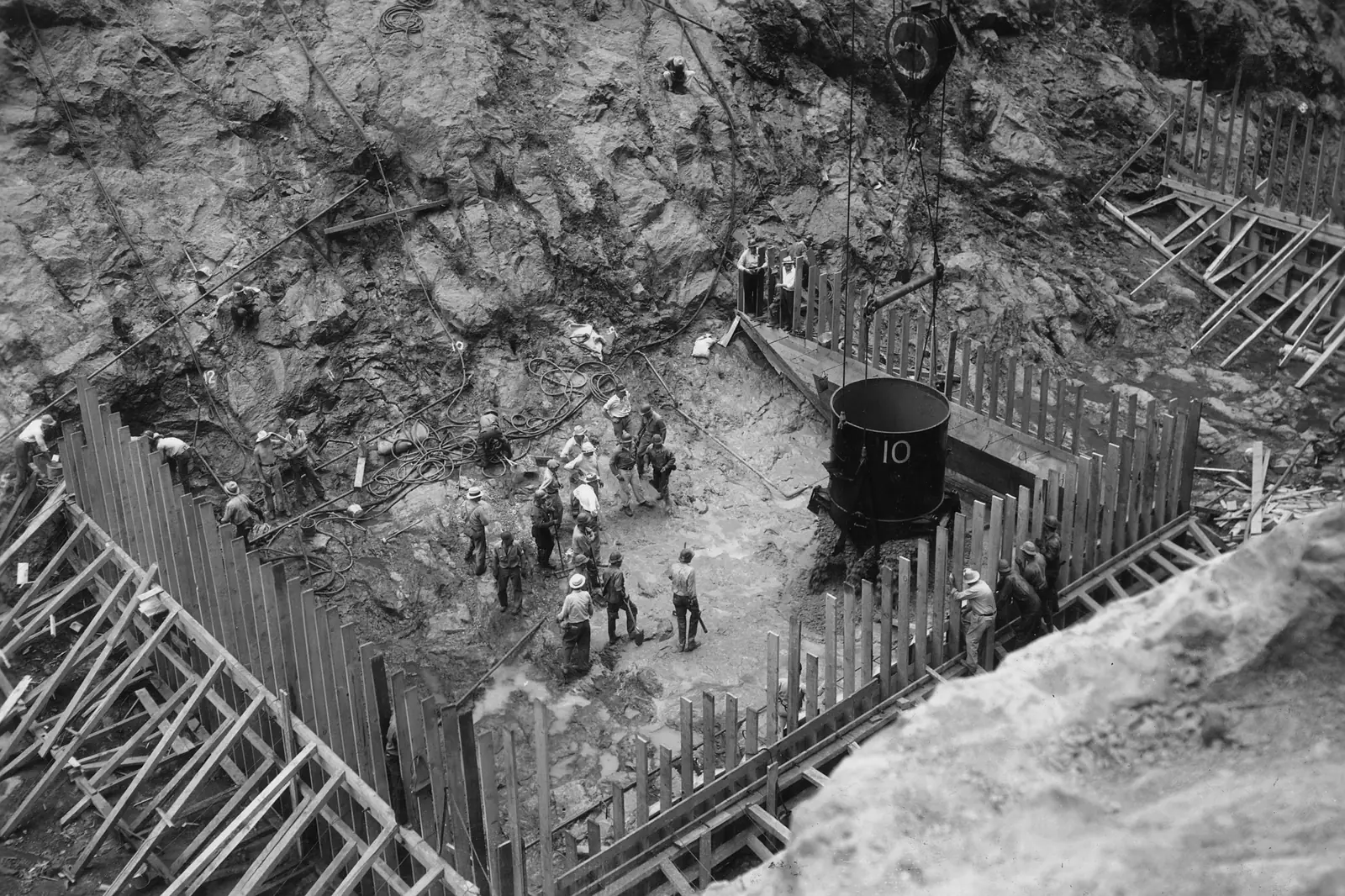
Efficiency changes what society can do
Agriculture provides one of the clearest examples. In 1880, 49.4% of the American labour force worked in agriculture. By 2022, direct on-farm employment represented only 1.2% of US employment. Yet agricultural production did not shrink. Between 1948 and 2023, US farm output increased by 210%, while labour input fell by 76%.[1][2]
The consequences extended far beyond farming. A society in which roughly half of the workforce is required to produce food has very different possibilities from one in which around one percent can do so. The capacity released from agriculture became available for medicine, engineering, science, education, manufacturing and industries that scarcely existed before. Productivity did not simply make farming cheaper; it increased the range of things society had the people and resources to do.
Penicillin offers another version of the same story. Fleming’s discovery in 1928 was scientifically extraordinary, but for years penicillin remained almost impossible to manufacture in useful quantities. The change came when researchers and manufacturers learned how to produce it reliably at industrial scale. Pfizer converted an old ice plant in Brooklyn into the world’s first large-scale penicillin factory in 1944. By the autumn of that year, a single day’s production could exceed the entire US production of penicillin in 1943.[3]
The discovery made a revolutionary medicine possible. Efficient production made it widely available. Similar stories run throughout economic history: new technology opens the door, but our ability to produce and deliver something efficiently determines how many people ultimately benefit from it.
The built environment has not followed the same curve
Across the life of buildings and infrastructure, the productivity record looks very different. Construction itself has improved slowly. Information created at great expense is often lost or recreated as assets move between design, construction, ownership and operation. Existing buildings remain difficult and expensive to understand, maintain and upgrade.
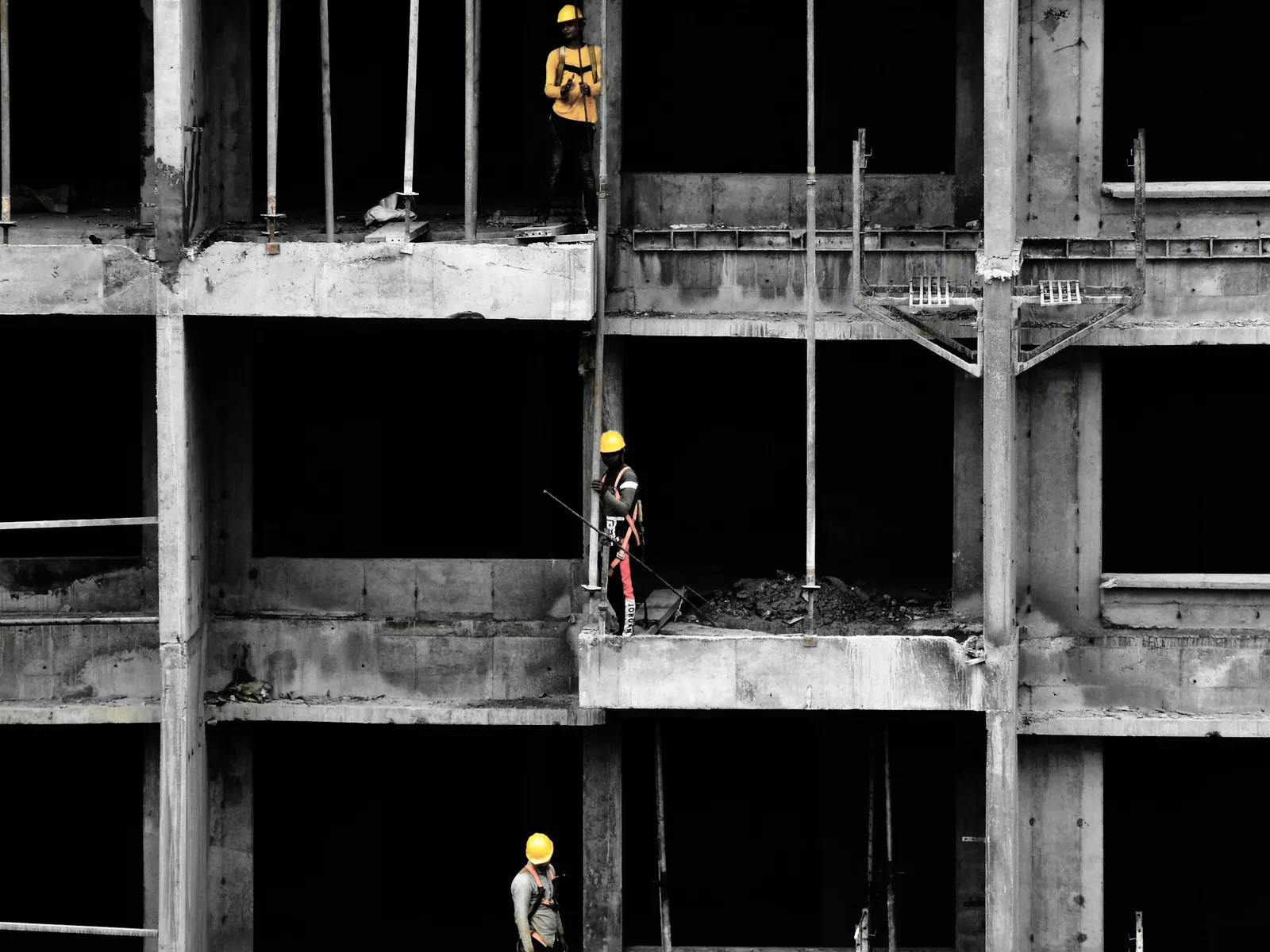
Construction gives us the clearest long-run measure. Across 42 countries representing more than 90% of global construction value added, labour productivity increased by only around 10% between 2000 and 2022. Across the economy as a whole it increased by roughly 50%, while manufacturing productivity rose by around 90%.[4]
The comparison does deserve care. Buildings are not manufactured goods, and construction takes place on changing sites under local regulation, with different ground conditions, supply chains and teams. What gets built has also become safer and more technically complex in ways that simple output measures struggle to capture. Those qualifications explain some of the difference, but not a productivity gap of this size across dozens of countries and more than two decades.
Weak productivity also shows up in what happens to information after a project is completed. IFMA and Autodesk cite research estimating that as much as 95% of data generated through engineering and construction goes unused downstream. Facilities professionals surveyed in the same study reported losing an average of 12% of their time because of fragmented data.[5]
Information is created to design something, recreated or reformatted while it is built, partially transferred when the project finishes and then reconstructed again when the asset needs to be maintained, refurbished, financed, insured or sold. The industry creates extraordinary amounts of information, but much of it sits inside separate companies, systems and projects. When responsibility moves, the next team often has to work backwards to establish things that were already known.
The scale of existing building stock makes that expensive. The IEA estimates that roughly two-thirds of the global floor area standing today will still be in use in 2040, while annual energy-renovation rates remain below 1% in most major markets.[6] UNEP estimates that buildings and construction account for nearly half of global material extraction.[7] Improving productivity therefore involves more than reducing the hours required to complete professional work. It also means understanding existing assets faster, preserving information that has already been paid for and making better use of the physical resources already in place.
Why the industry has been so difficult to transform
The built environment has not arrived here because the people working in it failed to notice the benefits of technology. Buildings and infrastructure are difficult to standardise because they are rooted in place. Each project has to deal with its own site, regulatory environment, climate, infrastructure and supply chain.
The work is also divided between many organisations. An owner might employ designers, engineers, cost advisers, project managers, contractors and specialist trades on the same project. Those groups often operate under separate contracts and use different systems. Each is responsible for a particular part of the outcome, and the team assembled for one project may be completely different from the team assembled for the next.
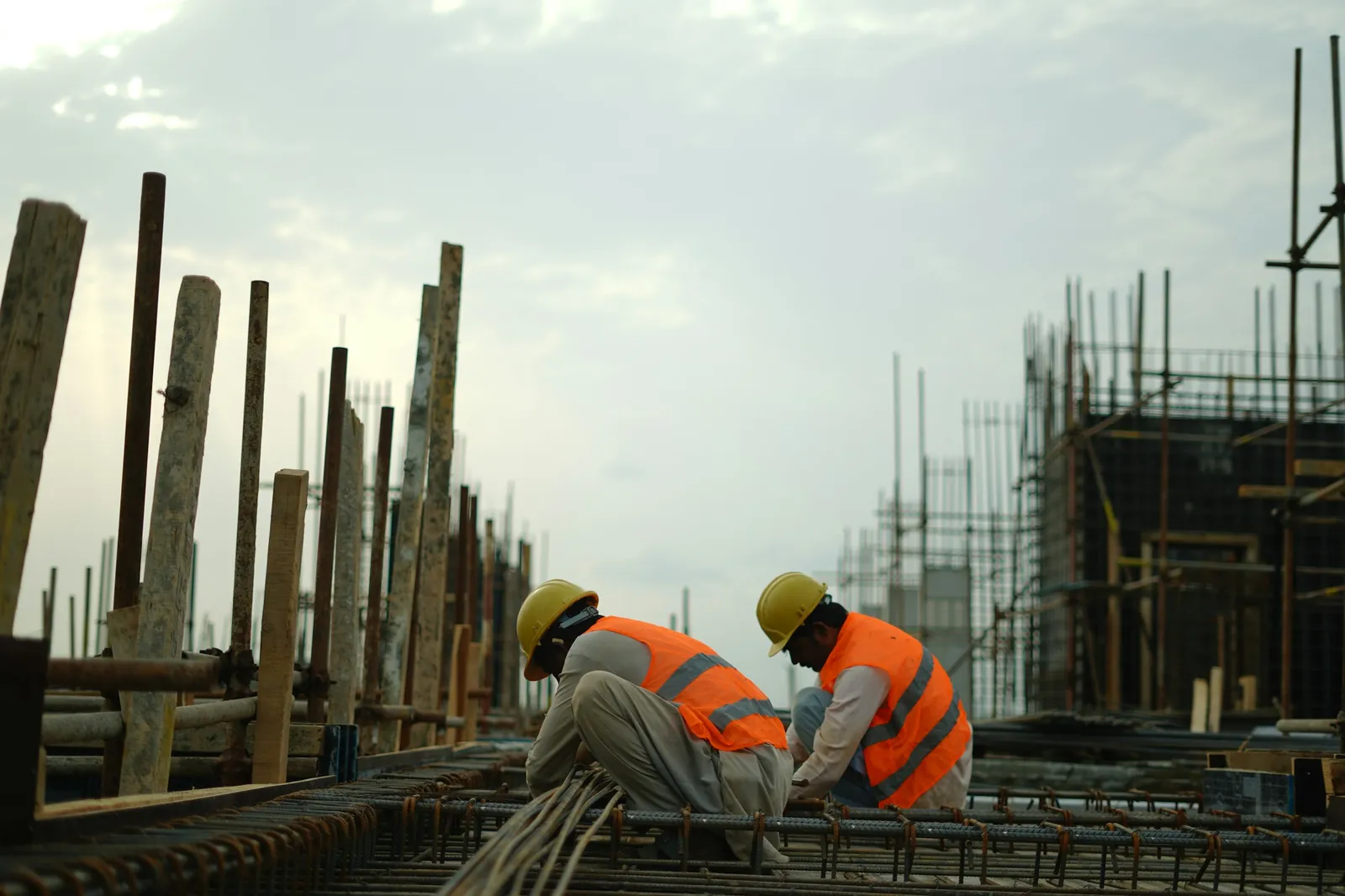
This fragmentation has economic consequences. The ten largest construction companies together account for only around 3% to 4% of the global market, while average EBIT margins across the wider construction ecosystem are around 5%.[8] Built-environment businesses often have less room to fund long-term experimentation than industries where a few companies can invest heavily, standardise production across enormous volumes and retain most of the upside.
The project model also makes it difficult for improvements to carry from one job to another. Teams assemble and disperse. The organisation funding construction may not operate the asset twenty years later. A contractor may receive little benefit from improving information that mainly helps a future owner. A professional-services firm that cuts the time required for an assignment may find that the immediate commercial reward is pressure to reduce its fee.
Physical failures can also be expensive or dangerous, so regulation, checking, insurance and professional accountability cannot simply be stripped away in pursuit of speed. Any new way of working has to function inside a system where people are expected to stand behind important decisions.
Earlier waves of technology entered this environment and still produced real improvements. Digital drawings replaced paper. Building information modelling improved design coordination. Project information moved into the cloud. New systems emerged for cost, scheduling, maintenance and asset management. What changed far less was the amount of human work sitting between those systems. People still had to interpret the drawing, reconcile the numbers, check the photograph, assemble the report and decide what should happen next.
The constraints are beginning to move
Artificial intelligence changes the equation because much of the built environment runs on information that software has historically struggled to understand. Drawings, specifications, photographs, contracts, inspection reports, maintenance records, invoices and correspondence all contain context and ambiguity that normally require a professional to interpret.
Modern models can increasingly work with this material directly. They can also do more than analyse it. A system can gather evidence from several sources and compare what it finds before preparing an output or updating another system. When the case falls outside what it can handle confidently, the decision can be passed to a professional.
This moves AI much closer to the actual workflow. McKinsey estimates that agentic AI could create roughly $430 billion to $550 billion of annual value across real estate, construction and development globally.[9]
Our ability to observe the physical world is improving at the same time. Laser scanning and LiDAR can capture precise geometry. Drones can inspect roofs, façades, land and infrastructure. Photogrammetry and 360-degree imagery can create repeatable visual records, while computer vision can increasingly interpret what those records contain. RICS already describes these technologies being used for measured surveys, roof inspections and defect identification.[10]
The opportunity is much larger than making the industry’s documents easier to search. It is to reduce the amount of human work required to understand projects and assets, make decisions and deliver professional services.
Physical abundance still has to be built
This shift is arriving while demand for the physical world is increasing. Global construction output was around $13 trillion in 2023 and could reach roughly $22 trillion by 2040.[4] The world simultaneously needs more housing, power generation and transmission, data centres, hospitals, laboratories, factories and resilient infrastructure, while an enormous stock of existing buildings needs to be maintained and upgraded.
We increasingly hear about an age of abundance, often in relation to intelligence, energy or digital goods. For most people, though, abundance is physical. It is being able to afford a good home. It is having reliable transport, enough energy, functioning hospitals and schools, and places where people can work, build companies and make things. Scientific progress still needs laboratories. Artificial intelligence still needs power and data centres.
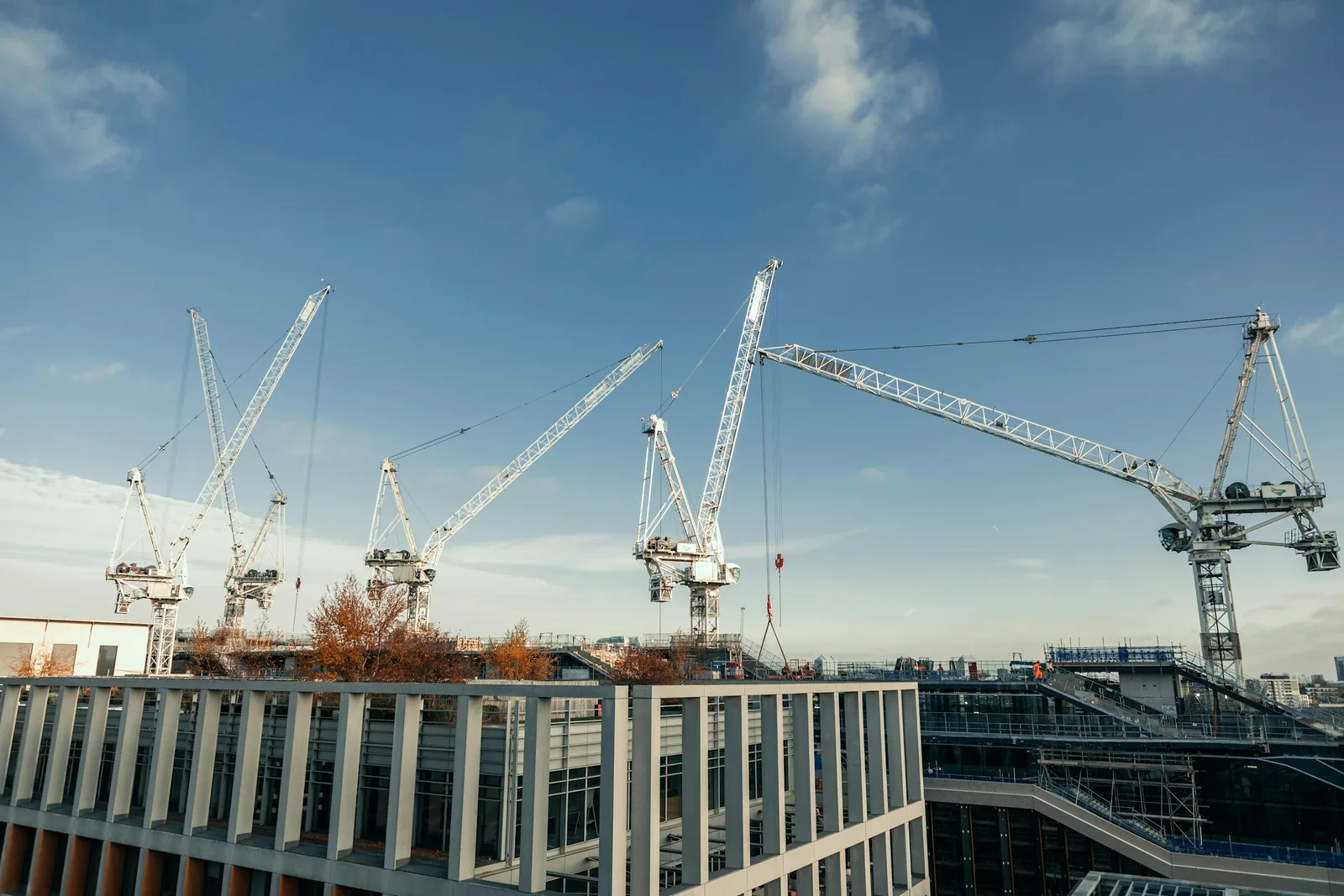
If we want more of these things, we have to get better at creating and maintaining the physical world. The built environment cannot remain one of the few major parts of the economy where producing more still depends so heavily on adding more people, more time and more cost.
The Tavio roadmap
Tavio is being built to help bring this productivity improvement into the work of the built environment. Our ambition is to build a professional services and technology business that allows people to accomplish substantially more with the expertise, capital and resources available to them.
We believe this requires a closer relationship between the people who understand the work and the people developing the technology. A procurement professional knows why two apparently similar proposals may be commercially different. A surveyor knows what an observation can establish and what requires further investigation. That knowledge should shape how systems are built, how they are used and how their results are assessed.
Our approach is to develop technology alongside professionals, use it in service delivery and make the resulting systems available to other firms. As those activities develop together, they can support a wider range of work.
The roadmap has four stages:
These stages overlap. Technology can be sold from the beginning, while experience gained through its use informs what we build next.
Today, we are building AI for procurement workflows and deploying AI inside operating businesses. From this starting point, we intend to develop selected professional services and extend the technology available to our customers.
Established professional firms are a lasting part of this model. Their expertise and client relationships, combined with Tavio’s technology, create the capacity to deliver more. As we develop services ourselves, we intend that experience to strengthen the tools available to the firms we serve.
Stage 01 · AI for professional workBuild systems around the work professionals already do
Much of the time required for professional work is spent establishing the facts on which a judgement depends. Documents must be read, figures reconciled, assumptions examined and missing information recovered. The judgement may be the most valuable part of the assignment, but reaching it can require days of preparation.
Procurement is one example. Several companies may propose to undertake the same work, yet submit prices covering different scopes, qualifications and exclusions. Before a client can make an informed decision, someone has to establish what is actually being offered.
We are building AI to reduce the work involved in that process. The aim is to give the professional a clearer comparison, supported by the underlying evidence, with unresolved questions brought into view.
Success means reducing the total effort required to complete the job, including the time spent reviewing and correcting the result. A system that achieves this provides immediate value to a customer and a foundation for further work.
Stage 02 · AI-enabled service deliveryDeliver complete outcomes with professionals and technology
The next stage is to bring these systems into selected services delivered by Tavio, directly or alongside established firms.
Working across an entire assignment allows us to address costs that remain hidden when attention is confined to a single task. Producing an analysis faster may achieve little if the inputs still take days to assemble or the result requires extensive correction. The larger improvement comes from changing how the work is organised from the initial instruction to the final advice.
We intend to bring experienced practitioners and engineers together in the teams delivering that work. Daily use gives both a direct view of where the technology helps and where it falls short. Problems that recur can be addressed in the software, allowing an improvement made during one assignment to benefit those that follow.
The objective is for experienced professionals to oversee a greater volume of work while maintaining the standard their clients require. Less time spent reconstructing information and performing routine checks leaves more capacity for investigation, judgement and advice.
Lower costs can also change what clients are able to commission. An assessment undertaken once because it is expensive may become practical to repeat. Evidence examined only in a small sample may be reviewed more broadly. Over time, better productivity can make services possible that would previously have been difficult to justify.
Stage 03 · Technology for the industryMake proven systems available to other firms
The value of technology developed through this work can extend well beyond Tavio’s own services.
Some systems will become products that professional firms can adopt directly. Others will need to be introduced into a customer’s business with greater involvement from our team, connecting information, adapting workflows and establishing how the work will be reviewed.
Working with other organisations also tests whether an approach is useful beyond our own teams. Where the same requirements appear repeatedly, they can be incorporated into the product. What initially required substantial development can become easier to provide to the next customer.
Tavio therefore has two routes to market. A client can commission a service, or a firm can use our technology to improve its own delivery. Investment in the systems can benefit both, allowing their use to grow beyond the volume of work we undertake ourselves.
Stage 04 · Expansion across the built environmentEnter further services from a stronger starting point
As the business develops, we intend to enter services where the work already undertaken gives us a meaningful advantage.
That advantage may come from relevant professional expertise, software that can be applied to a related task, an existing customer relationship or information that makes a subsequent assignment easier. Each new service must meet a clear customer need. Its connection to the business should also make it better or less costly to deliver.
Physical inspection and assessment offer one possible extension. Surveyors and engineers could work together to establish where imagery, laser scanning or drones reduce the effort required for a particular survey.
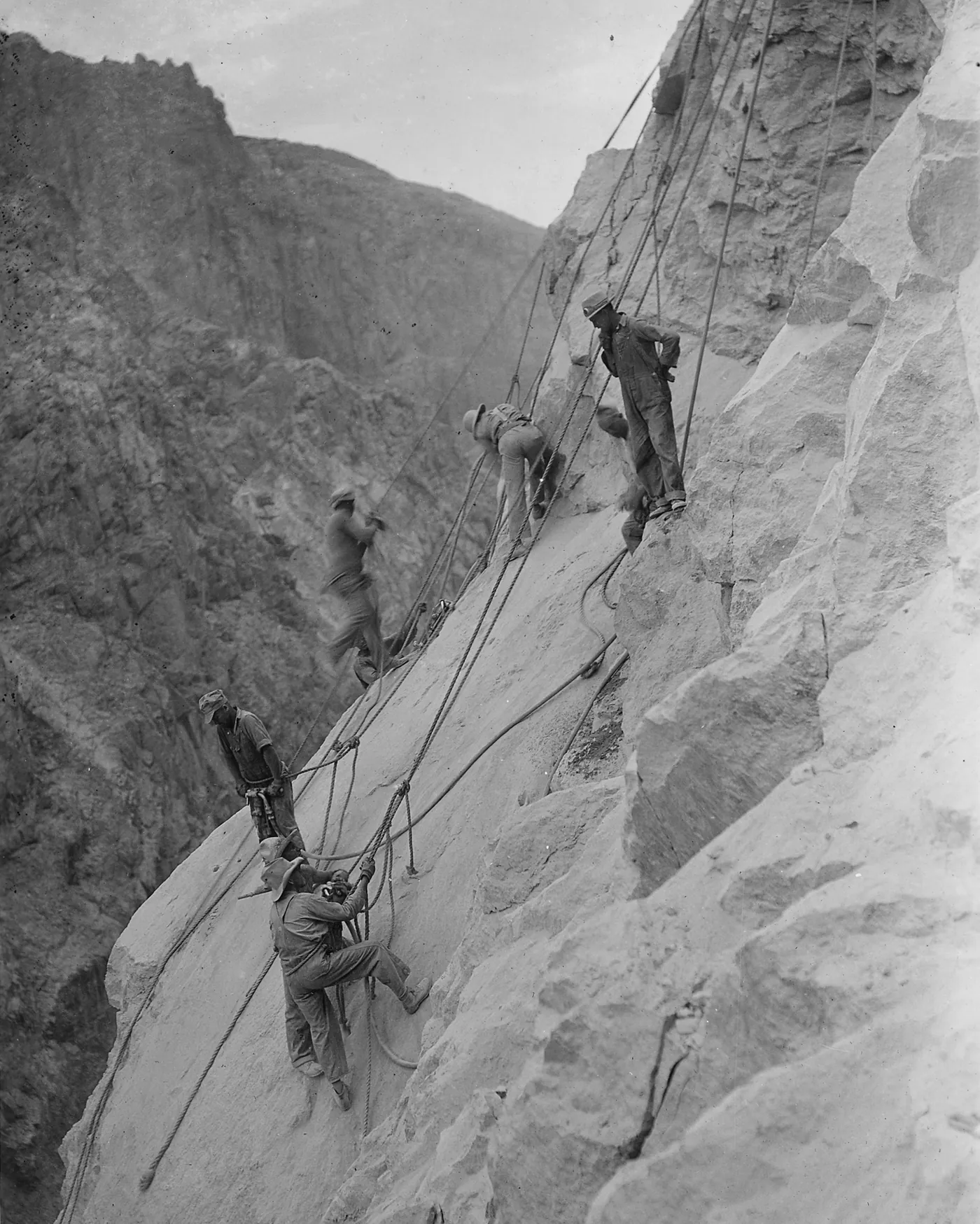
A repeatable visual record, for example, could help a surveyor identify changes between visits and focus attention on areas of concern. Read alongside previous reports, specifications and planned work, that evidence could also reduce the preparation required for the assessment.
Systems developed in this way could be used in Tavio’s services and made available to other firms. The same relationship between professional expertise, practical use and product development would extend into a further area of the industry.
This is how we intend to broaden the business. Each successful expansion should add expertise and technology that make further progress possible.
More with less
The built environment will not experience the same productivity revolution as agriculture. Buildings are not crops, projects are not factories and professional judgement will remain central. The opportunity is to reduce the enormous amount of work surrounding that judgement: information that has to be reconstructed, checks that can be performed automatically, physical conditions that can be captured more accurately and administrative processes that consume expert time.
The goal is greater capacity from the people, capital and materials already available. If those resources can produce more useful work, society can build, improve and maintain more of the physical world it depends on.
For generations, higher productivity changed what humanity could afford to produce. The technologies now emerging give us a credible route to extend more of that progress into the built environment.
Summary
The built environment needs to create, maintain and improve more physical assets without a proportional increase in labour, time and materials. AI and better ways of observing the physical world give us an opportunity to change how much of that work is performed. Professional expertise is essential to turning that opportunity into dependable services.
Tavio’s roadmap is to:
- Build AI for professional work, beginning with tasks where better systems can remove substantial preparation and information handling.
- Deliver selected services using that technology, bringing professionals and engineers together to improve the work from beginning to end.
- Make the resulting systems available to the industry, through products and deployments that increase other firms’ capacity.
- Expand, using the expertise and technology already developed to enter each new area from a stronger starting point.
We are beginning with procurement products and AI deployments. The ambition is a broad professional services and technology business in which practical experience improves the systems, and better systems increase what professionals can deliver.
Tavio can extend that progress through both the work we undertake and the firms we equip. As more work becomes economically possible, more buildings can be assessed, more improvements considered and more of the physical world maintained and renewed. That is the contribution we intend to make: more useful work from the people and resources already available.
References
- USDA NASS, Relation of Labor Force in Agriculture to Total Labor Force and Total Population of the United States.
- USDA ERS, Agricultural Productivity in the United States.
- ACS, Penicillin Production through Deep-tank Fermentation.
- McKinsey, Improving construction productivity is the new imperative.
- IFMA and Autodesk, Optimizing Building Management with a Lifecycle Approach.
- IEA, Technology and Innovation Pathways for Zero-carbon-ready Buildings by 2030.
- UNEP and GlobalABC, Global Status Report for Buildings and Construction 2025–2026.
- McKinsey, The next normal in construction: How disruption is reshaping the world’s largest ecosystem.
- McKinsey, How agentic AI can reshape real estate’s operating model.
- RICS, Digital surveying in practice: using drones, laser scanning and smart capture techniques.